Bianca Knight, General Manager, Commercial Claims, Pacific Basin
Bianca Knight manages claims, dispute handling, sanctions compliance, and contract management at Pacific Basin, one of the world's largest dry bulk operators with more than 200 vessels.
Scaling sanctions compliance without expanding the team
“Our process used to be heavily PDF-driven. The team introducing the counterparty would get them to fill out a form with their details. That would go to the due diligence team making manual checks, then documenting the screening results, sharing them and storing them in a way that's auditable so you can show later that you've completed a due diligence process on this counterparty.
“When there was a sudden spike of sanctions in 2022, our manual process simply wasn’t designed to cope with the increase in volume.
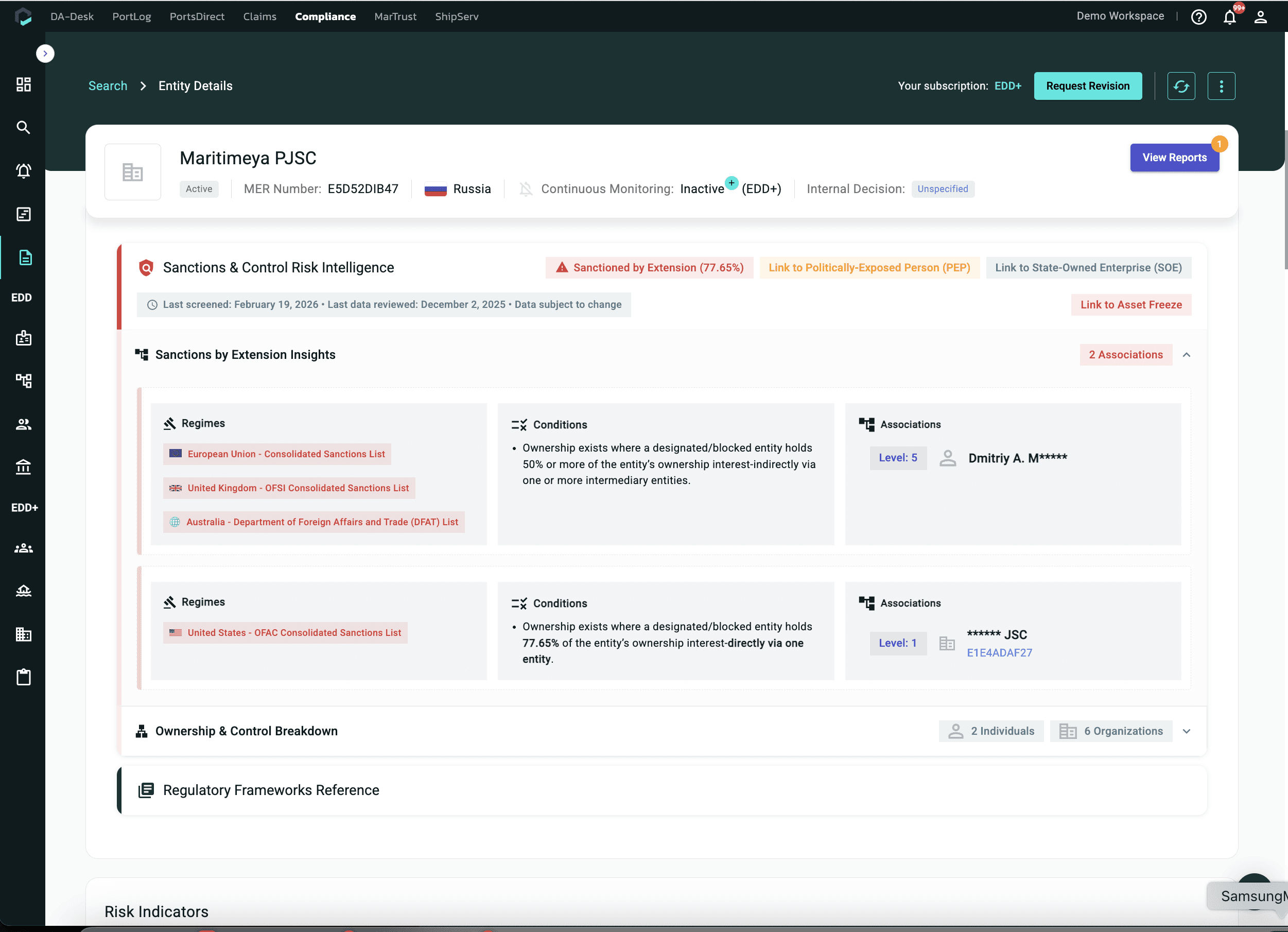
"Using Marcura has allowed us to scale without adding to the team. Checks are done in the platform, and we can see the results the entire time. We’re able to configure the system to reflect how we want to manage our risk and there's an audit trail on what's submitted when which is important for us.
"It's also allowed us to push down onboarding to the teams who are introducing the counterparties and shift the compliance decision making to a smaller team trained in making those decisions.”

Digital counterparty screening and audit-ready workflows
“We have internal decision makers that provide compliance approvals within each function, overseen by a small team that includes myself and the risk team in Hong Kong.
"We've been able to move away from just collecting forms, making sure they're filed, a lot of manual workflow processes, to actually making the compliance decisions and considering scenario analyses rather than spending a lot of time on admin.”

The case for shared due diligence infrastructure
“Looking across the industry, everyone’s running their own checks with their own risk matrix, their own risk appetite, and their own interpretations. There isn’t an industry-wide standard for what we consider acceptable due diligence.
"As jurisdictions increasingly go their own way on regulations it’s going to become increasingly difficult to remain compliant unless the industry comes together to agree on a common baseline for due diligence.
"There needs to be transparency for there to be trust in it. We would need to understand who did the check, when it was done, what it was checked against. I think that would allow you to have a shared platform or a more transparent platform everyone's able to rely on.
"Where we see the sticking point is often compliance with banks and payments being delayed while they investigate counterparties that we have already screened and cleared. They have their own processes that are perhaps not as fast as ours.
"So, when we’re imagining a common baseline, it would be good to bring in broader traders and bankers so that we're all sharing the same data and not individually running the same checks.”