Balancing an impossible equation
Rising regulatory complexity, conflicting screening results, duplicated verification, and limited dedicated headcount being squeezed from all sides.
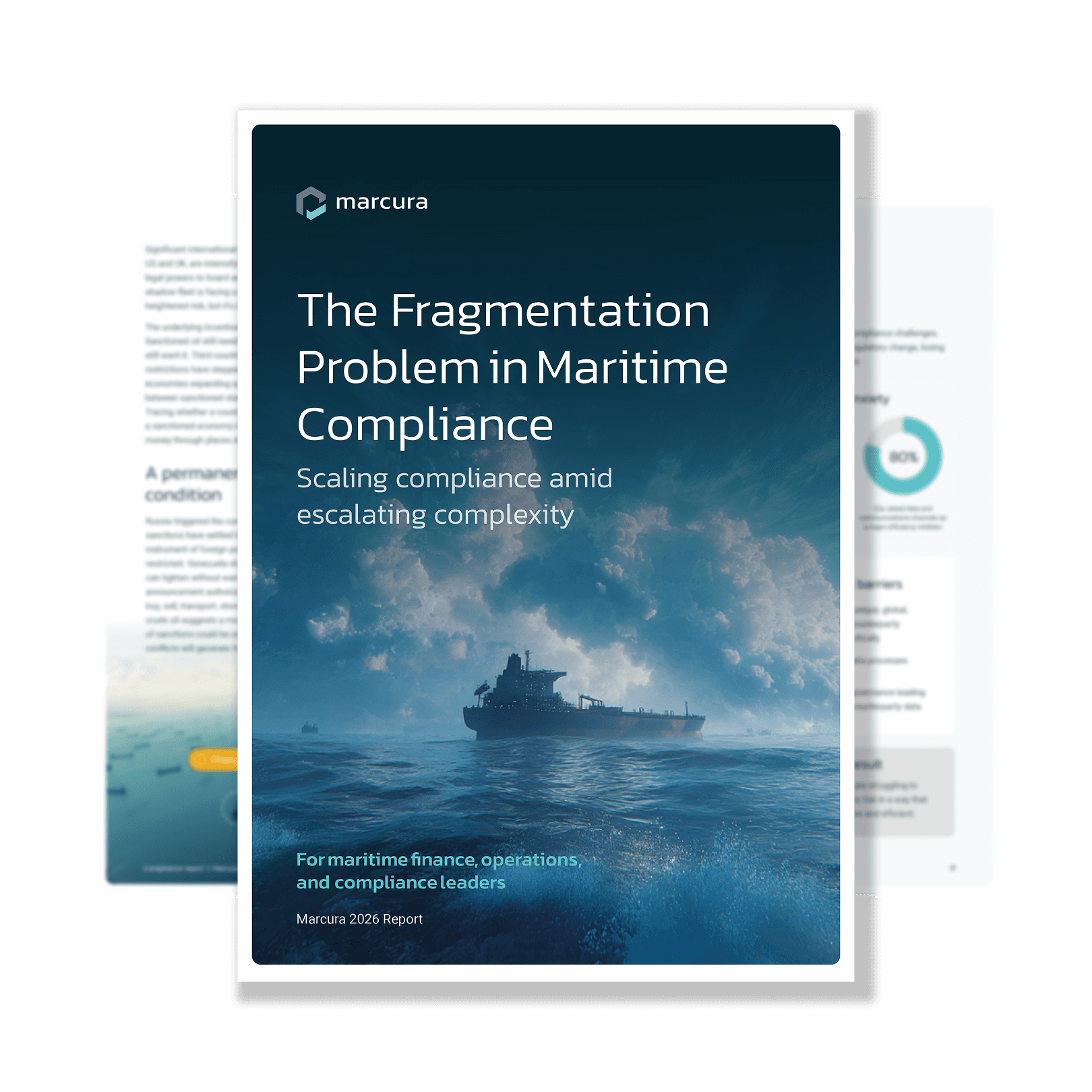
A major new study from Marcura examines how leading maritime organisations are responding and makes the case for a new approach to compliance built around shared standards and collective learning.
Featuring perspectives from Pacific Basin, Enesel Group, Emirates Shipping Lines, and the Maritime Anti-Corruption Network.
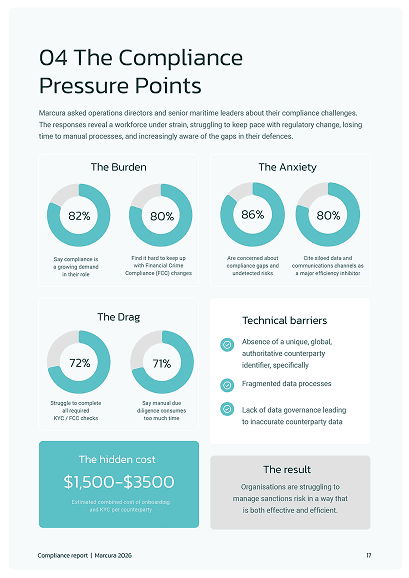
We asked Operations Directors how they felt about the demands placed on their existing compliance teams
80% find it hard to keep up with Financial Crime Compliance changes
71% say manual due diligence consumes too much time
86% are concerned about compliance gaps and undetected risks
“There are very large shipping lines capable of doing screening themselves, which needs a lot of manpower. ESL believes in using technology driven solutions for this and sit in a sweet spot of company size where it makes sense to get a specialist involved.”
Fieke Nijland, VP, Legal Counsel, Emirates Shipping Line
“The industry is already complex enough to keep everyone on their toes. Without clear rules, that complexity can easily turn into chaos. I want compliance to stay simple.”
Mike Gerasymov, Global Head of Corporate Risk, Enesel Group
“As jurisdictions increasingly go their own way on regulations it’s going to become increasingly difficult to remain compliant unless the industry comes together to agree on a common baseline for due diligence.”
Bianca Knight, General Manager, Commercial Claims, Pacific Basin
The Fragmentation Problem
See key insights from the report.
Download the infographic
Learn more about how Marcura can help you scale due diligence across all of your counterparties without adding to your headcount

Webinar
Why Maritime Compliance is Fragmenting and What Comes Next.
A closer look at Marcura Compliance