









Maritime inspections whether for safety, condition, or compliance—are often still manual, fragmented, and paper-based.
Printed checklists, handwritten notes, and separate cameras lead to inefficiencies, missed findings, and delayed follow-up. With increasing regulatory pressure and higher costs of non-compliance, the need for a digital, auditable, and collaborative inspection process is greater than ever.
Streamline Inspections
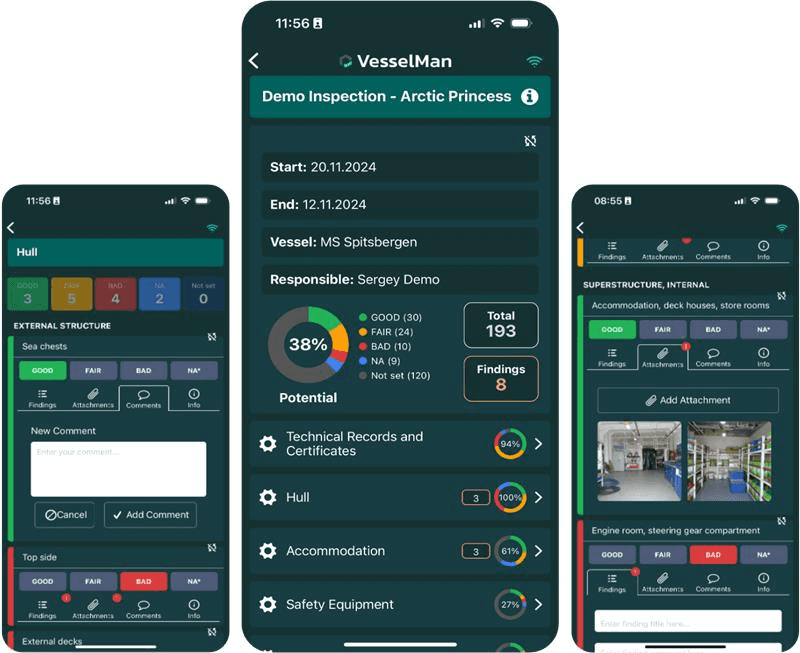
Build a central template library, standardise inspection checklists (ISM, RightShip, SIRE 2.0, and more), and deploy them across the fleet.
Conduct inspections even offline via the mobile app—with automatic sync when reconnected.


Capture Findings, Images, and Comments On-Site
Log findings, attach images, and add comments directly from your mobile device—removing the need for separate cameras or transcription later.
Findings can be tagged, prioritised, and linked to tasks for immediate action.
Link Inspections to Maintenance and Projects
Escalate findings directly into dry-docking projects or push them into your PMS for resolution—ensuring nothing is missed and creating full traceability from inspection to corrective action.
Real-Time Collaboration Between Ship and Shore
Inspection progress, open findings, and corrective actions are visible in a central dashboard for both onboard teams and shore-based management. Invite external partners or suppliers into the workflow when needed.
Configure & Standardise
Build checklists in a central template library for consistent inspections across all vessels.
Assign & Prepare
Create an inspection project, assign templates, and delegate responsibilities to onboard or shore-based staff.
Execute Onboard
Capture findings, photos, and comments in the mobile app, with or without internet access.
Review & Escalate
Track open items, prioritise actions, and escalate critical findings into projects or PMS tasks.
Report & Share
Generate formatted PDF reports instantly for auditors, internal teams, or external stakeholders.
Analyse & Improve
Aggregate inspection data to identify trends, address recurring issues, and improve safety outcomes.

New guide
Take control of Procure-to-Pay
Why invoice control breaks down between PO and payment — and how leading ship managers close the gap. Free guide, plus two diagnostic tools.