Why Maritime Claims Needs a Human in the Loop
AI-powered laytime and demurrage tools promise to automate claims calculations, yet operators consistently find themselves still chasing documents, filling data gaps, and resolving disputes. The critical question when evaluating any claims solution: does the technology work for you, or do you end up working for it?

By Kenneth Hviid Laursen
SVP, Operations, Marcura Claims
Author: Kenneth Hviid Laursen, SVP, Operations, Marcura Claims
A growing number of AI-powered tools promising to automate laytime and demurrage calculations have entered the market recently. These platforms parse documents, populate fields, and generate draft statements.
The promise is compelling: reduce your claims team's workload, speed up calculations, eliminate errors.
But operators using these tools are finding the reality is quite different from the fully automated experience they were expecting.
Rather than eliminating vast swathes from their workload, teams are still spending a significant proportion of their time on document chasing, accuracy checks, and dispute resolution.
The hidden labour tax of "Automated" claims
The problem reveals itself at different stages of the claims process:
Document collection: AI tools don't gather documents. The tool might flag what's missing, but someone on your team is still sending follow-up emails and making phone calls to obtain signatures and reconcile timestamps.
Data completeness: Pure AI platforms typically depend on user-fed or incomplete data from connected systems. If the data isn't complete before the calculation begins, someone on your team must fill the gaps.
Intelligence generation: AI is only as strong as the data it receives. As such any learning loop that feeds insights back to post-fixture or chartering teams depends on complete, validated data. If data capture isn't systematic, the promised insights about port performance, problematic clauses, or counterparty behaviour will be incomplete or difficult to trust.
The pattern is consistent: AI tools reduce some repetitive tasks but don't eliminate the workload.
What a managed service offers that AI only models can’t
The key difference between a managed service and a pure AI or software-based approach lies in how value is delivered and sustained.
A managed service such as Marcura Claims combines technology, AI, and human expertise to ensure every calculation has complete port documentation (including signatures and stamps), is validated, defensible, and complete as well as highlighting any potential grey areas that the customer might face as part of the negotiation.
In contrast, pure AI tools focus mainly on automating workflows within their own ecosystem. Accuracy checks, document completeness, and exception handling remain with the customer's in-house team.

Don't miss our latest webinar on 26th February
Speed, Accuracy, Recovery: A New Approach to Laytime Claims
Quantifying the difference: what the control groups show
Data from control groups emonstrate that Marcura’s managed service model, combining AI trained on more than 700,000 SOFs with ‘human-in-the-loop’ expert validation, delivers improvements in several key areas:
2-3% greater accuracy
1-2 days faster turnaround
A smoother Statement of Facts (SOF) process
Significantly less manual document collection
Here's what that distinction means in practice:
Complete data before workflows begin: Marcura’s operational model captures, validates, and reconciles all relevant data, including NOR and SOF, before workflows begin. This means systematic agent follow-up and structured data extraction happen as part of the process, not as tasks your team manages afterward.
Expert validation and auditable record: Human review by domain experts who catch exceptions and ambiguities that probabilistic logic misses. When disputes arise, Marcura Claims delivers audit-ready, defensible records with full version control and traceability, something AI-based systems cannot consistently guarantee.
Intelligence without manual effort: The learning loop that feeds insights back to post-fixture and chartering teams only works when data is complete, validated, and standardized. Marcura Claims ensures complete data capture as part of the workflow, making insights automatic rather than dependent on your team's administrative effort.
Flexibility across ecosystems: Seamless integration with systems like DA-Desk, PortLog, or other VMS tools without tying you to one proprietary platform. Pure AI systems perform best within their own environment, and their efficiency decreases rapidly when handling workflows outside that ecosystem.
Outcomes not tools to manage
The first question to ask yourself when evaluating any claims solution must be:
"Who does the work?"
A pure AI platform may speed up certain tasks, but it still requires operational oversight. AI-only systems provide tools, but without the human oversight, rule governance, and compliance assurance that transform automation into tangible business value.
You become a process monitor, fixing exceptions and validating outputs.
Contrast this with a managed service like Marcura Claims, which combines technology and human oversight to remove that burden entirely.
Your team concentrates on commercial decision-making, not document chasing, not manual data entry, not recalculating disputed claims.
There’s no doubt AI has a critical role to play in maritime claims. The real question isn't whether to use technology. It's whether that technology works for you, or whether you end up working for it.
"Marcura Claims helped us move from manual processing to a streamlined, insight-driven model. It has directly improved our decision–making and operational efficiency." Kristian Helt, Director (Chartering), Pacific Basin
Transform previously uncontrollable port time into a reliable source of competitive advantage and enhanced profitability.
Using post-voyage claims data to improve future voyage estimates
Read more
recent news


Posidonia 2026
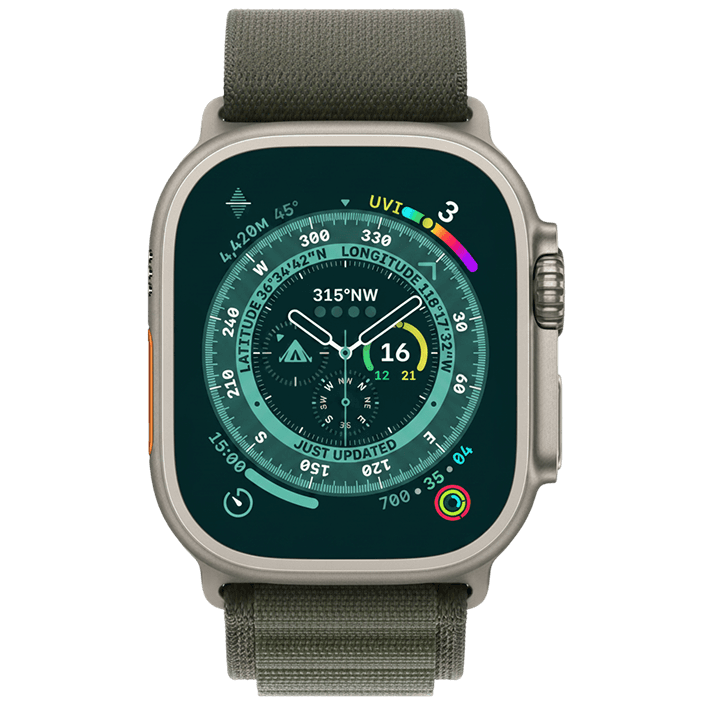
Win an Apple Watch Series SE 3.
Enter the Marcura draw. Winners announced live in Athens. Entries close 5th June 2026.